
A tattoo, once a symbol of permanence, is no longer a lifelong commitment. For many, a design that once held deep meaning can become a source of regret, a reminder of a past chapter they wish to close. In the past, options for removal were limited and often led to scarring. Today, advanced laser technology has revolutionized the process, offering a beacon of hope for those seeking a clean slate. But the ultimate question remains: can this technology truly turn back time and completely erase an old tattoo? For individuals seeking the most advanced and effective solution, the journey often begins with finding the Best Laser Tattoo Removal in Coimbatore, where expertise and technology converge to make the seemingly impossible, possible.
Understanding the Permanence of a Tattoo
To appreciate how laser removal works, it’s essential to first understand why a tattoo is permanent in the first place. When you get a tattoo, the artist uses needles to inject ink deep into the dermis, the layer of skin that lies beneath the surface epidermis. The ink particles are deliberately large, too large for your body’s immune system to break down and eliminate. Your body’s white blood cells, specifically macrophages, recognize the ink as a foreign substance and rush to the site. While they attempt to “eat” and carry away the particles, the ink is simply too big to be engulfed. The macrophages end up surrounding the ink particles, effectively locking them in place within the dermis, which is why the design remains visible through the transparent outer layer of skin for a lifetime.
The Science of Shattering Ink: How Lasers Work Their Magic
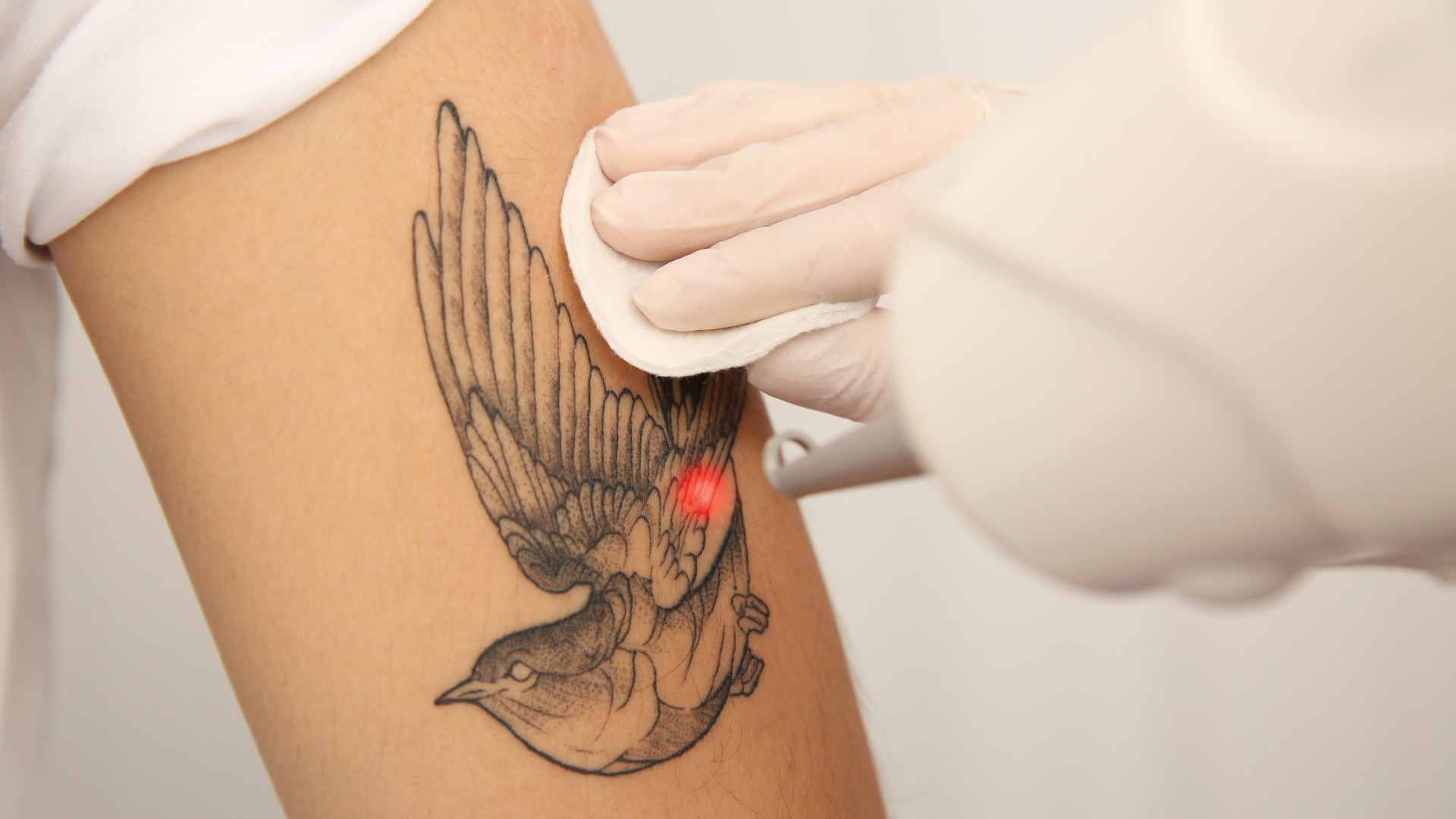
Laser tattoo removal is a marvel of modern physics, targeting the ink without significantly damaging the surrounding skin. The process relies on highly specialized Q-switched or Picosecond lasers, which emit incredibly short, high-energy pulses of light. Each pulse lasts for just a nanosecond or a picosecond (a trillionth of a second).
This is not just any light; the laser is tuned to specific wavelengths that are selectively absorbed by the pigments in the tattoo ink. When the laser beam is directed at the tattoo, the ink particles absorb this immense energy in a fraction of a second. This rapid absorption of energy causes the temperature of the ink particles to rise dramatically, creating a photoacoustic shockwave. This shockwave is powerful enough to shatter the large, stubborn ink particles into minuscule fragments, small enough for the body’s natural “clean-up crew” to finally handle. Different colors of ink absorb different wavelengths of light, which is why a clinic may use multiple types of lasers or different settings to treat a multi-colored tattoo.
The Body’s Clean-Up Crew Takes Over
The laser’s job is to break the ink down; your body does the rest of the work. Once the ink particles have been fragmented, the macrophages that were previously unable to eliminate them can now spring into action. They engulf these tiny particles and transport them away from the skin through the lymphatic system, the body’s natural filtration and waste removal network. The ink is then processed by the liver and eventually eliminated from the body.
One review of 352 patients treated with a Q-switched 1064/532 nm Nd:YAG and 755 nm alexandrite laser found that 47.2% achieved “successful tattoo removal” after 10 sessions and 74.8% after 15 sessions.
This is a gradual and methodical process. It doesn’t happen overnight. This is why multiple treatment sessions are always necessary. Each session shatters another layer of ink, and in the weeks following each treatment, your body diligently works to clear the resulting debris. The tattoo visibly fades more and more with each cycle of treatment and healing.
The Decisive Factors: Can Complete Erasure Be Achieved?
So, we return to the central question: can an old tattoo be completely erased? For a great number of cases, the answer is a resounding yes, or at least so close to complete removal that the remnants are virtually invisible to the naked eye. However, the outcome is not guaranteed and depends on a complex interplay of several factors.
Interestingly, the age of the tattoo is often an advantage. Over many years, the body has been subtly working on the tattoo. Some natural fading and breakdown of the ink will have already occurred. The ink particles may have also migrated slightly, making them less dense and potentially easier for the laser to target and for the body to clear away.
Ink color is one of the most significant variables. Black and dark blue inks are the easiest to remove because they absorb all laser wavelengths, making them highly responsive to treatment. Reds, oranges, and warm colors are also generally responsive. The most challenging colors are often greens, light blues, yellows, and especially white, as they are more difficult to target with specific laser wavelengths.
The quality and depth of the ink also play a crucial role. Amateur tattoos, often done with less ink at uneven depths, can sometimes be easier to remove than professional ones. Professional tattoos typically use very dense, high-quality ink that is deposited uniformly into the dermis. While this predictability is helpful for the technician, the sheer volume of ink can require more sessions to break down completely.
Your skin tone is another important consideration. Laser tattoo removal is highly effective on all skin tones, but the procedure is generally most straightforward on lighter skin, as there is a greater contrast between the skin and the ink. For darker skin tones, a skilled practitioner must use specific laser wavelengths and lower energy settings to avoid targeting the natural melanin in the skin, which could lead to hypo (lightening) or hyper (darkening) pigmentation.
Finally, the location of the tattoo on your body matters. Tattoos on areas with good circulation, like the torso, neck, and upper arms, tend to fade faster because a robust blood supply means more immune cells are available to carry away the shattered ink particles. Tattoos on extremities, such as the ankles, feet, and fingers, may fade more slowly due to reduced blood flow.

The Journey to a Clean Slate
A typical laser tattoo removal session is quick, often lasting only a few minutes. The sensation is frequently described as a series of sharp snaps against the skin, similar to a rubber band. Immediately after the treatment, the area will show a white, frosted appearance, which is a temporary reaction that fades quickly. This is followed by redness, swelling, and a sensation similar to a sunburn.
Proper aftercare is critical to the success of the treatment and to prevent complications. This involves keeping the area clean and protected, applying an antibiotic ointment, and avoiding sun exposure, which can interfere with the healing process. Sessions are usually spaced six to eight weeks apart to give the skin ample time to heal and for the body to clear away the fragmented ink.
The journey requires patience, but for those committed to removing an old tattoo, the results can be life-changing. The ability to look in the mirror and no longer see a reminder of a past you’ve moved on from is a powerful experience. While many variables are at play, modern laser technology has made the complete or near-complete removal of old tattoos a realistic and achievable goal.

It is a testament to how science can offer us a second chance at a first impression. For those ready to take this step, a consultation at a trusted facility like the Touch Aesthetic Clinic is the definitive way to receive a personalized assessment and begin the journey toward reclaiming your skin.